Sharing memories between different mobile ecosystems shouldn't mean sacrificing the crisp details of your shots. While "green bubbles" often get a bad rap for pixelated media, the issue lies in the transfer method, not the devices themselves. If you wonder how to send iPhone photos to Android without losing quality, read this guide to get 5 methods.
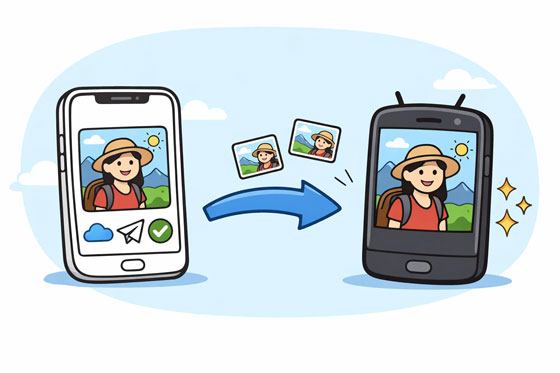
Samsung Data Transfer is a desktop-based tool designed specifically for cross-platform data migration. It allows direct transfer of photos from an iPhone to an Android device without compression. You can get your photos with the same resolution after the migration. Furthermore, this program supports most Android and iOS devices, like OnePlus, iQOO, Motorola, TCL, Xiaomi, OPPO, Tecno, iPhone, iPad, etc.
- Transfer original photos at full resolution from iOS to Android.
- Faster and more stable than wireless methods for large photo libraries.
- Transfer videos, music, contacts, and more data as well.
- Data transfer from iPhone to iPhone and Android to Android is available.
- The transferred photos will not overwrite your current pictures on your target device.
- Support Android 6.0 and upper, and iOS 5.0 or later.
Download the iPhone-to-Android photo transfer software.


Step 1: Install the data transfer software on your computer and connect both your iPhone and Android to the computer via USB cables.
Step 2: Launch the software, and enable the USB debugging on Android according to the on-screen guide. Then let your iPhone trust your computer, and ensure the iPhone is listed as the "Source" and the Android as the "Destination". Or you can click "Flip".
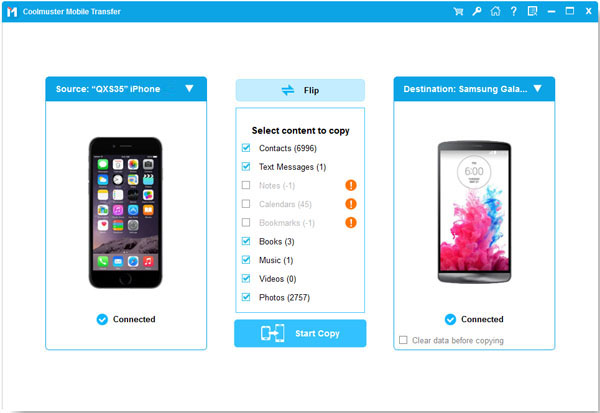
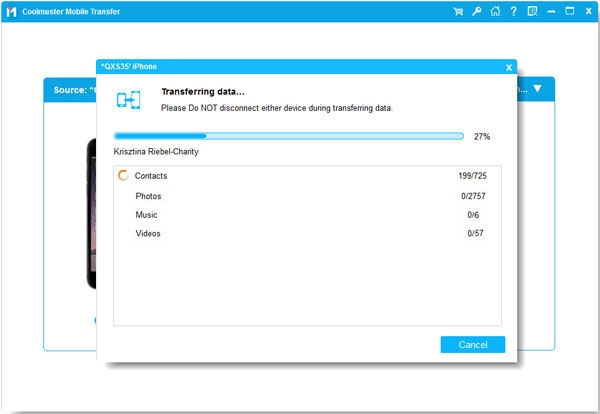
Step 3: Check the "Photos" box from the list of supported data types. Click "Start Copy". The software will move your entire gallery in its original resolution.
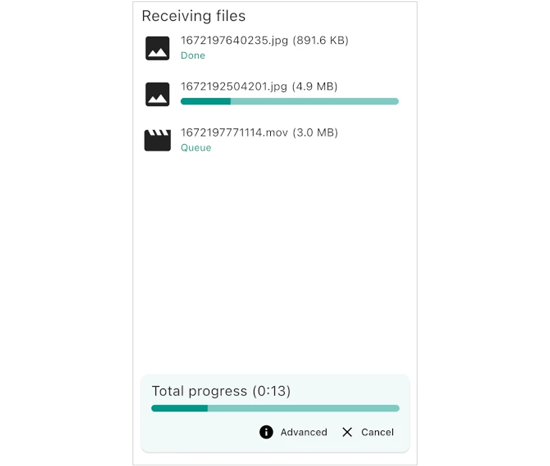
LocalSend is a free, open-source app that transfers files over a local Wi-Fi network, similar to AirDrop but cross-platform. Besides, it supports multiple OSes, including iOS, Android, Windows, Mac, and Linux.
Step 1: Install LocalSend on both the iPhone and the Android device. Ensure both devices are on the same local network.
Step 2: Open LocalSend on the iPhone, tap "Send", and select the photos you want to send. Then select the Android device name from the list.
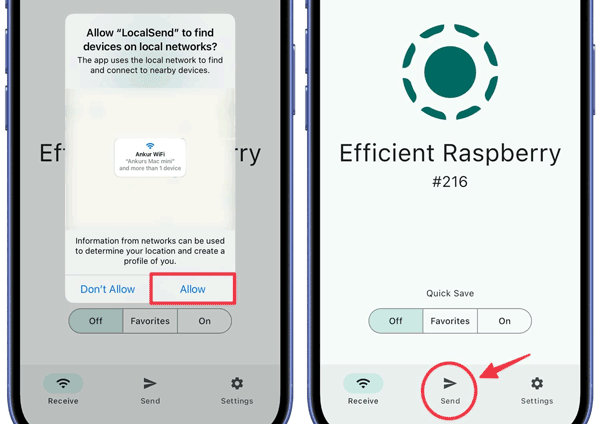
Step 3: The pictures are transferred via your local network at high speeds without hitting a cloud server or being compressed.
Google Photos is a widely used cloud service that supports both iOS and Android. When configured correctly, it can preserve photo quality. However, if you have used up the 15GB of free storage space, you need to delete some files or upgrade your plan first.
Step 1: Download and install Google Photos on both your mobile devices. Then make sure you have logged in with the same account on your devices.
Step 2: On your iPhone, open Google Photos and go to "Settings" > "Backup" > "Backup Quality", and select "Original".
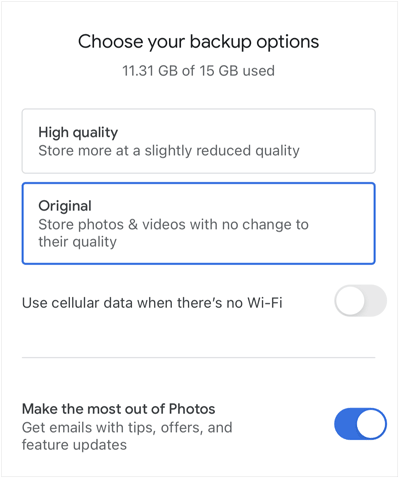
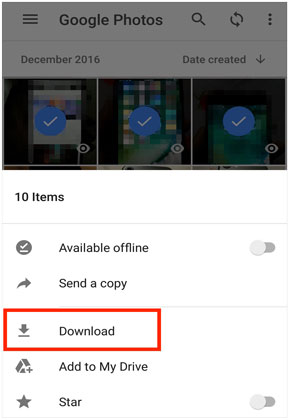
Step 3: Let the photos upload. After that, open the app on your Android phone. You can download the images that are identical to the versions on your iPhone.
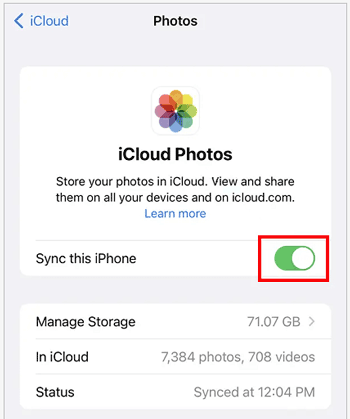
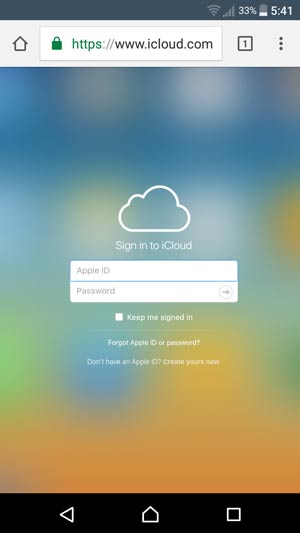
iCloud can also be used to transfer photos to Android, provided you access it through a web browser. This approach is suitable for users who rely heavily on iCloud and need occasional transfers. Please note that it is not as seamless as native Apple-to-Apple transfers.
Step 1: On the iPhone, go to Settings and choose "[Your Name]" > "iCloud" > "Photos". Then enable "Sync this iPhone" to upload your photos to iCloud.
Step 2: On the Android device, open a browser and visit iCloud.com. Then log in with the Apple ID.
Step 3: Navigate to the "Photos" section, and download the desired photos manually. By the way, if you cannot sign in with your iCloud account on Android, you can do it on your computer's browser, and then move the photos to your Android device via USB.
Using a computer as an intermediary allows full control over file integrity. Then you can move your iPhone photos to Android with no compression or re-encoding with drag and drop.
Step 1: Plug your iPhone into a computer, and then navigate to "This PC" > "[Your iPhone]" > "Internal Storage" > "DCIM".
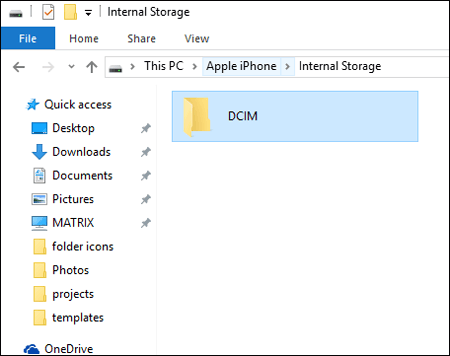
Step 2: Drag the desired photo folders to your desktop. Once done, unplug your iPhone.
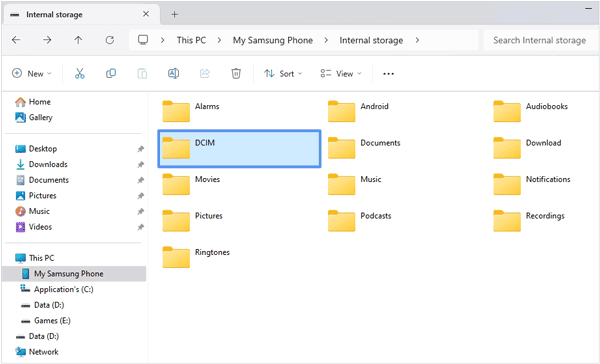
Step 3: Plug in your Androd device, and drag those folders into the Android's "Pictures" or "DCIM" folder. Then you will get the pictures with original resolution.
Q1: Why are photos sent from iPhone blurry on Android?
Photos often become blurry because some apps (such as messaging or social media platforms) automatically compress images to save bandwidth. Additionally, preview-based sharing methods may reduce resolution.
Q2: Which photo formats retain quality best?
Q3: Which transfer methods commonly reduce quality?
It's entirely possible to send photos from an iPhone to an Android device without losing quality if you choose the right method. Choosing Samsung Data Transfer, you can transfer all your photos at once with the same quality, which offers maximum efficiency.
Additionally, localSend provides a convenient wireless option. Cloud services such as Google Photos and iCloud can also work well when configured for original quality. Thus, choose what you want to send your photos.
Related Articles
New Guide to Top iPhone to Android Transfer Apps for Smooth Transition
[Top 5 Ways] How to Transfer Music from iPhone to Android in Ease
How to Transfer Text Messages/iMessages from iPhone to Android?
How to Transfer Photos from Mac to Samsung (Full Guide in 2026)

Sophie Green, Chief Editor of Samsung-messages-backup website, has been focusing on the realm of Android Recovery, Android Transfer (Backup), Android Device Tips, Phone Clean, and Phone Transfer technologies. Recognized contributions on leading platforms attest to her esteemed expertise and reliability.
Copyright © samsung-messages-backup.com All Rights Reserved.